
 de
 en
Reading time: approx. 7 to 9 minutes
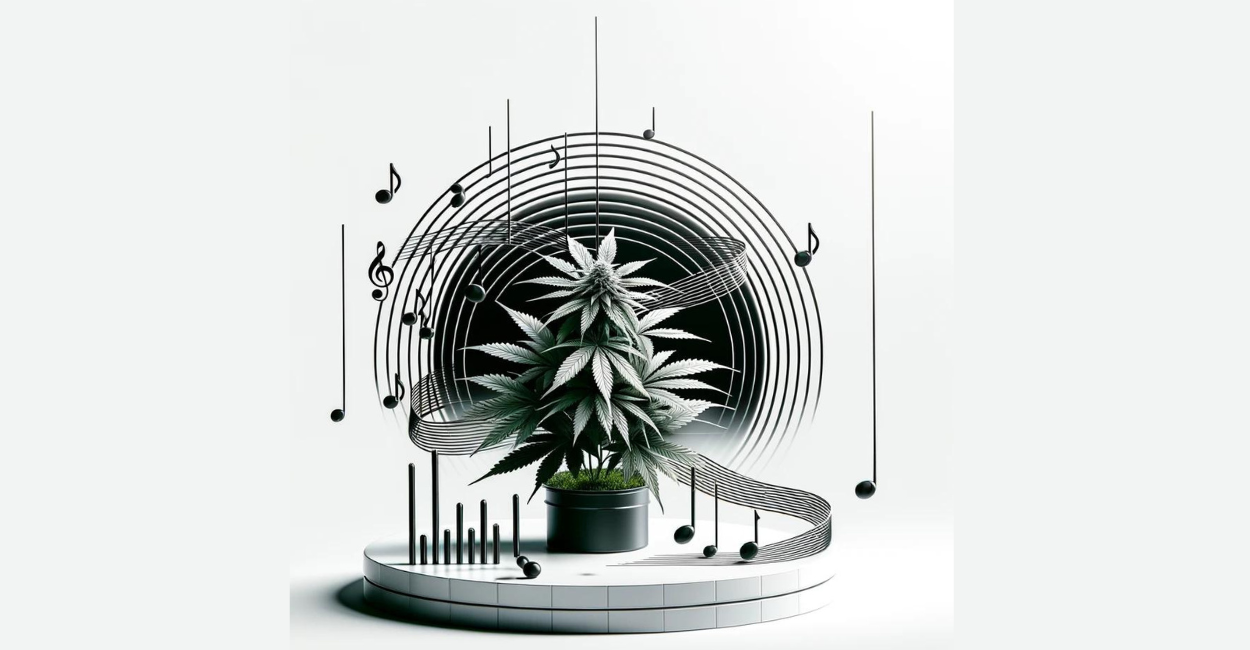
Hemp plants under the influence of music sit between botany, sound research and culture. Plants do not hear like humans, but they can respond to mechanical stimuli, vibrations and environmental conditions.
This guide explains what music, sound and vibration mean in relation to plants. The focus is not a grow guide or yield promise, but a factual classification: what role can sound waves play as environmental stimuli, why should direct claims about hemp plants be treated carefully and how can the topic be understood without myth, hype or shop advertising?
Cannoptikum classification
Music for plants is not a proven growth lever. A more useful approach is to look at sound and vibration as environmental stimuli studied in plant research and evaluated differently depending on species, frequency, volume, duration and experimental setup.
What does music influence mean for hemp plants?
When people talk about music for hemp plants, the factual point is not musical taste or harmony in the human sense. Plants do not have hearing like humans. What matters are physical stimuli: sound waves, vibrations, air movement, frequency ranges and mechanical signals.
Music is only one possible form of sound. For plant research, it matters less whether a piece is called jazz, classical or ambient. Measurable parameters such as volume, frequency, duration, distance from the plant and whether the plant actually responds to the stimulus are more important.
Useful foundations in the Cannoptikum system: Cannabis seeds explained, Hemp glossary and Cannabis seed setup.
Plants, sound and vibration
Plants are constantly connected with their environment. Light, temperature, water, air movement, substrate, nutrient availability and mechanical stimuli influence their development. Sound and vibration belong in this broader environmental context.
The topic is better explained through mechanical stimuli than through romantic music images. Sound is a pressure wave. When it reaches plant tissue, very small movements or vibrations can occur. Whether and how a plant responds depends on the experimental setup and the plant species.
Sound
Sound describes measurable waves in air or other media. Music is only one cultural form of it.
Vibration
Vibrations can mechanically stimulate plant tissue. The response is not automatically positive or uniform.
Environmental stimulus
Sound is one of many possible environmental factors and should never be treated as the main factor in isolation.
What does research say about sound and plants?
Plant research investigates whether sound and vibration can influence germination, growth, stress responses, metabolic processes or defence reactions. Such studies often use model plants, algae, crops or controlled experimental systems.
The findings show that plants can respond to certain mechanical and acoustic stimuli. However, this does not automatically mean that music reliably leads to stronger growth, better quality or higher yield in everyday settings. Several steps separate laboratory observation, greenhouse trials, outdoor conditions and a concrete hemp plant.
A clean reading of the research
- Most studies examine sound or vibration, not musical taste.
- Results depend strongly on the setup, including frequency, duration, volume and plant species.
- Direct grow promises are problematic if they are not supported by robust data for the specific plant.
- Hemp needs special caution, because general plant findings should not be transferred one to one.
Why hemp plants should be classified carefully
Hemp or cannabis is a botanically and legally sensitive plant. A guide about music and hemp plants should therefore not sound as if certain playlists, genres or frequencies reliably improve cultivation, growth or yield.
For Cannoptikum, the better role of this article is factual botany and cultural classification. Music becomes an entry point into the question of how plants interact with environmental stimuli. The core message is that plant responses are complex and should not be reduced to simple music recipes.
 Mark, Cannoptikum Crew: With this topic, restraint is more useful than a loud tip. Sound can be interesting as an environmental stimulus, but music does not explain a strain. Genetics, setup, plant conditions and clean data remain the key layers.
Music does not replace a stable plant environment
When discussing plant growth, the priorities should not be reversed. Light, temperature, humidity, root space, water balance, substrate and general plant management are much more tangible factors than music.
Sound can be viewed as an interesting research field. For practical classification, however, music should not be understood as a substitute for stable framework conditions. Especially with hemp, calm, legally aware and factual language is more useful than growth promises.
How to classify the music topic
| Level | Factual classification |
|---|---|
| Music | Cultural form of sound, emotionally meaningful to humans. |
| Sound | Physical stimulus that can be measured experimentally. |
| Vibration | Mechanical stimulus that can influence plant tissue. |
| Plant growth | Depends on many factors and cannot be explained by music alone. |
Limits: what this guide deliberately does not claim
This guide does not claim that hemp plants like music, that certain genres are better or that individual frequencies reliably improve growth, flowering or quality. Such statements would be too strong unless they were supported by specific and robust evidence.
Instead, the article classifies the topic as an intersection of plant research, sound, perception and cannabis culture. That is editorially cleaner and fits better with a modern Cannoptikum cluster that relies on precise classification rather than hype.
Important: Music can be an interesting cultural way to approach plants. For plant evaluation, measurable factors, genetic traits and stable framework conditions remain decisive.
Where this guide sits in the Cannoptikum system
This guide does not belong to cannabinoid chemistry, but to the softer botany and culture axis. It connects plant knowledge, environmental stimuli and cannabis culture without drifting into consumption romance or unsupported grow claims.
Botany
Understand hemp
Classify basic terms, plant, seeds and strain logic cleanly.
Setup
Framework conditions
Why plant, genetics and environment should be considered together.
FAQ about hemp plants and music
Quick answer: Not in the human sense.
Plants do not have hearing like humans. Sound waves, vibrations and mechanical stimuli are the relevant factors studied in plant research.
Quick answer: This cannot be stated generally.
Sound and vibrations can influence plant responses, but direct promises for hemp plants, growth or yield would be oversimplified.
Quick answer: This is not scientifically settled as a simple genre rule.
For plants, measurable parameters such as sound, frequency, volume, duration and experimental setup matter more than human music categories.
Quick answer: Both, but with a clear separation.
Botanically, the topic is sound and vibration. Culturally, it is about the connection between music, plants and cannabis imagery. This guide does not mix that with consumption or grow promises.
Related topics
Hemp plants under the influence of music is a useful topic when it is not written as a miracle promise. Factually, it is about sound, vibration, plant responses and the limits of simple music myths.
The guide connects plant knowledge, sound and culture without placing unsupported growth promises, application claims or shop advertising in the foreground.

Cannabis Seed Setup

Cannabis seed selection
